Baby development at 33 weeks
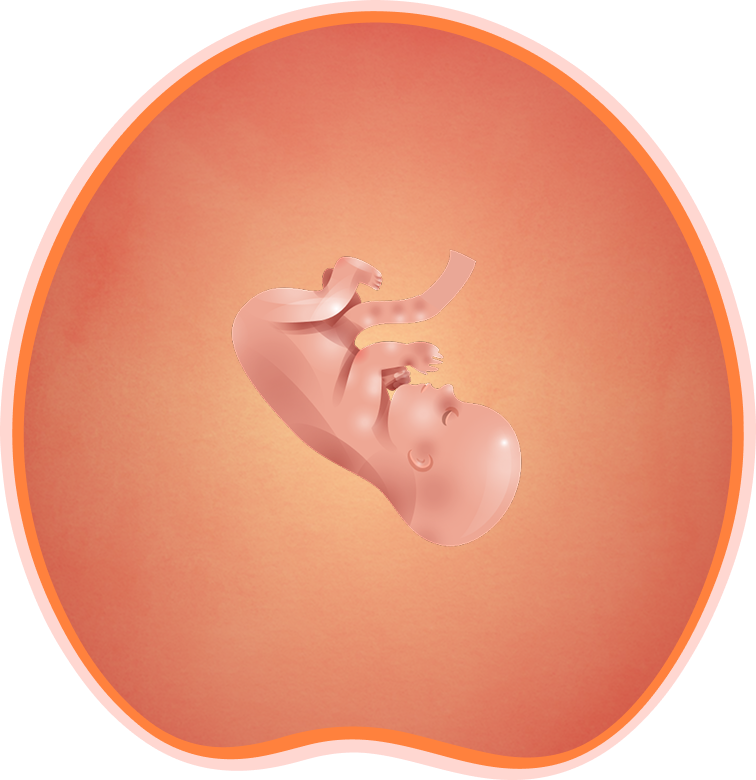
At 33 weeks, your baby is in the final stages of development and is rapidly preparing for life outside the womb. Although most major organs have formed, they continue to mature and become more efficient.
🧠 Brain Development
Your baby's brain is growing rapidly, with billions of nerve connections forming every day. The surface of the brain develops more folds and grooves, increasing its capacity for learning, movement, and sensory processing. The baby can recognize familiar voices, respond to music, and react to light.
🫁 Lung Development
The lungs are almost fully mature. They continue producing surfactant, a substance that keeps the tiny air sacs in the lungs open after birth, making breathing easier. While the lungs are still developing, many babies born around this stage can breathe with medical support if needed.
❤️ Heart and Circulation
The heart is strong and efficiently pumps blood throughout the body. The circulatory system is well developed, ensuring oxygen and nutrients reach all organs.
🦴 Bones and Skeleton
The bones continue to harden as calcium is deposited. However, the bones of the skull remain soft and flexible, allowing the head to pass more easily through the birth canal during delivery.
💪 Muscles and Body Fat
Your baby is becoming stronger every day. Muscles continue to develop, and layers of fat accumulate beneath the skin. This fat helps regulate body temperature after birth and gives the baby a plumper, smoother appearance.
👶 Skin and Appearance
The baby's skin becomes less wrinkled as fat fills out the body. It changes from reddish and translucent to a smoother, pinker appearance. Fine body hair (lanugo) begins to disappear, although some may still be present at birth.
👀 Eyes and Senses
The eyes can open and close normally, and the pupils respond to light. The baby can distinguish between light and dark and may even follow bright light shining through the mother's abdomen. Hearing is fully developed, allowing the baby to recognize familiar voices and sounds.
🖐️ Hands, Feet, and Nails
Fingernails and toenails have reached the tips of the fingers and toes. The baby has a strong grasp and can suck their thumb, helping strengthen the muscles needed for feeding after birth.
🛡️ Immune System
Protective antibodies continue to pass from the mother to the baby through the placenta. These antibodies provide temporary immunity against certain infections during the first few months after birth.
🍽️ Digestive System
The digestive system is mature enough to process nutrients after birth. The baby continues swallowing amniotic fluid, which helps develop the digestive tract. Waste products called meconium accumulate in the intestines and will become the baby's first stool after birth.
🧭 Position in the Womb
Most babies begin settling into a head-down (vertex) position in preparation for birth. Some babies may still be breech at this stage but often turn on their own over the next few weeks.
🤸 Movement
Although the uterus is becoming crowded, your baby remains active. You may notice more stretches, rolls, and pushes rather than large kicks because there is less room to move.
Baby at a Glance (33 Weeks)
- Length: About 43–44 cm (17–17.5 inches)
- Weight: Around 1.9–2.1 kg (4.2–4.6 pounds)
- Size comparison: Approximately the size of a pineapple
- Key milestone: Rapid brain growth, nearly mature lungs, increasing body fat, stronger immune system, and preparing for birth.
By 33 weeks, your baby is well-developed and focusing mainly on growing bigger, gaining weight, and maturing the brain, lungs, and immune system in preparation for delivery over the coming weeks.
Related Articles

Comfort foods that don’t worsen symptoms
Changing pads/tampons regularly
Herbal teas that help with cramps
.png)
Packing your hospital bag
Baby development at 32 weeks
Baby development at 25 weeks
Understanding Pregnancy Tests: How They Work
Managing odor safely